Kategori
Technical Upgrade for Large‑Event Security: FindrPro‑E Multi‑Spectral Anti‑Reconnaissance System Builds Urban Three‑Dimensional Protection Network
Large‑scale public events gather dense crowds amid complex urban building backgrounds, bringing risks of long‑range optical peeping and covert reconnaissance. The FindrPro‑E multi‑spectral anti‑reconnaissance gimbal has been put into practical security missions. Adopting tri‑spectral composite detection technology, it screens optical threats day‑and‑night over wide areas, with multiple networked units forming complete protection barriers.
Aug 28th,2026
3 Tampilan
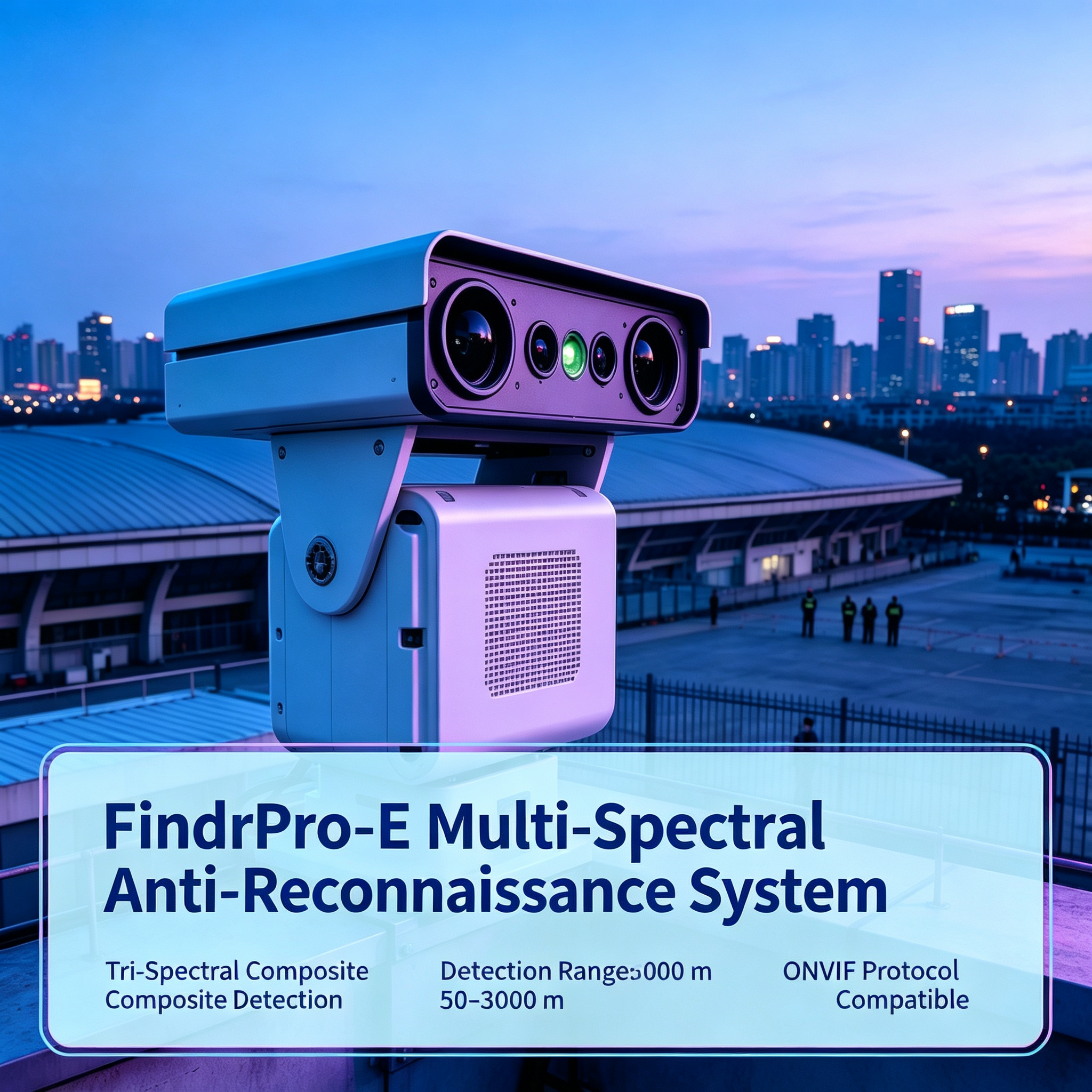
The FindrPro‑E multi‑spectral anti‑reconnaissance detection system has been officially deployed for security of several large‑scale public events. As an integrated white‑colored gimbal optimized for urban environments, it is equipped with composite tri‑spectral modules of visible‑light, infrared and laser, with effective detection range from 50 m to 3000 m. Its algorithms are specially optimized for identification of various optical reconnaissance equipment.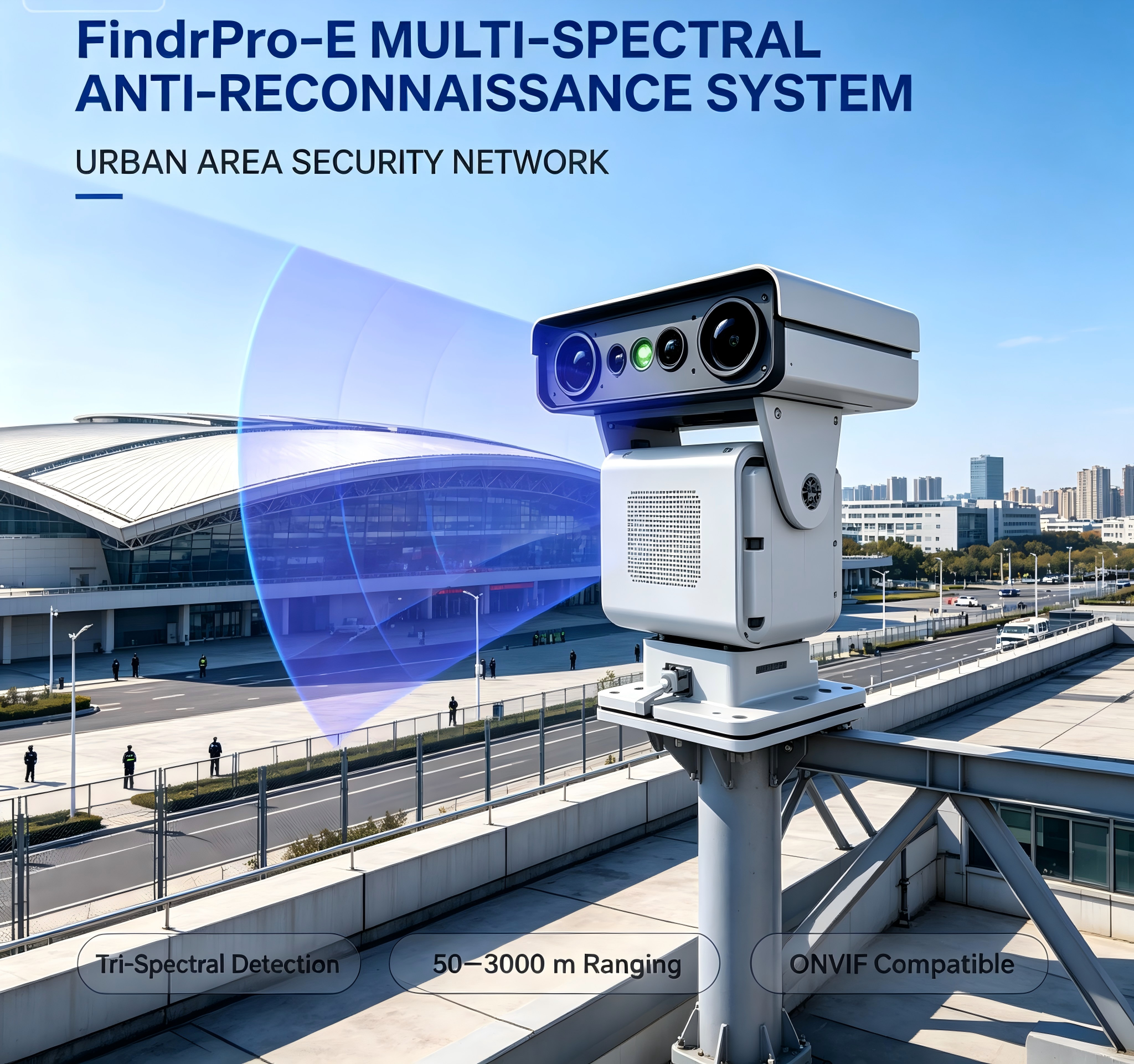
For real‑world deployment, units are installed on rooftops and high‑elevation steel poles around venues. Dispersed networked devices achieve cross‑coverage detection. In daytime, the system identifies telescopes, cameras and long‑range observation equipment via unique lens spectral‑reflection features within complex urban backgrounds. At night, infrared channels mitigate strong‑light interference from street lamps and building lights and reduce false alarms caused by glass and foliage reflections to secure nighttime recognition accuracy. Once suspicious optical reconnaissance signals are captured, the gimbal automatically rotates to lock targets, saves on‑site video evidence, and pushes alarm messages plus target bearings to security response terminals for subsequent disposal. Compliant with ONVIF universal security protocols, it can connect to existing security command platforms without large‑scale system reconstruction and lower project integration costs. During 72‑hour continuous non‑stop operational tests, the system filters massive environmental signals and effectively distinguishes ordinary surface reflections from real optical threats, greatly reducing manual observation workload for security teams. Applicable for sports events, exhibitions and other large‑scale activities, as well as routine security for major venues, government parks and key industrial plants, its practical reliability has been verified in complex urban conditions.